Blog
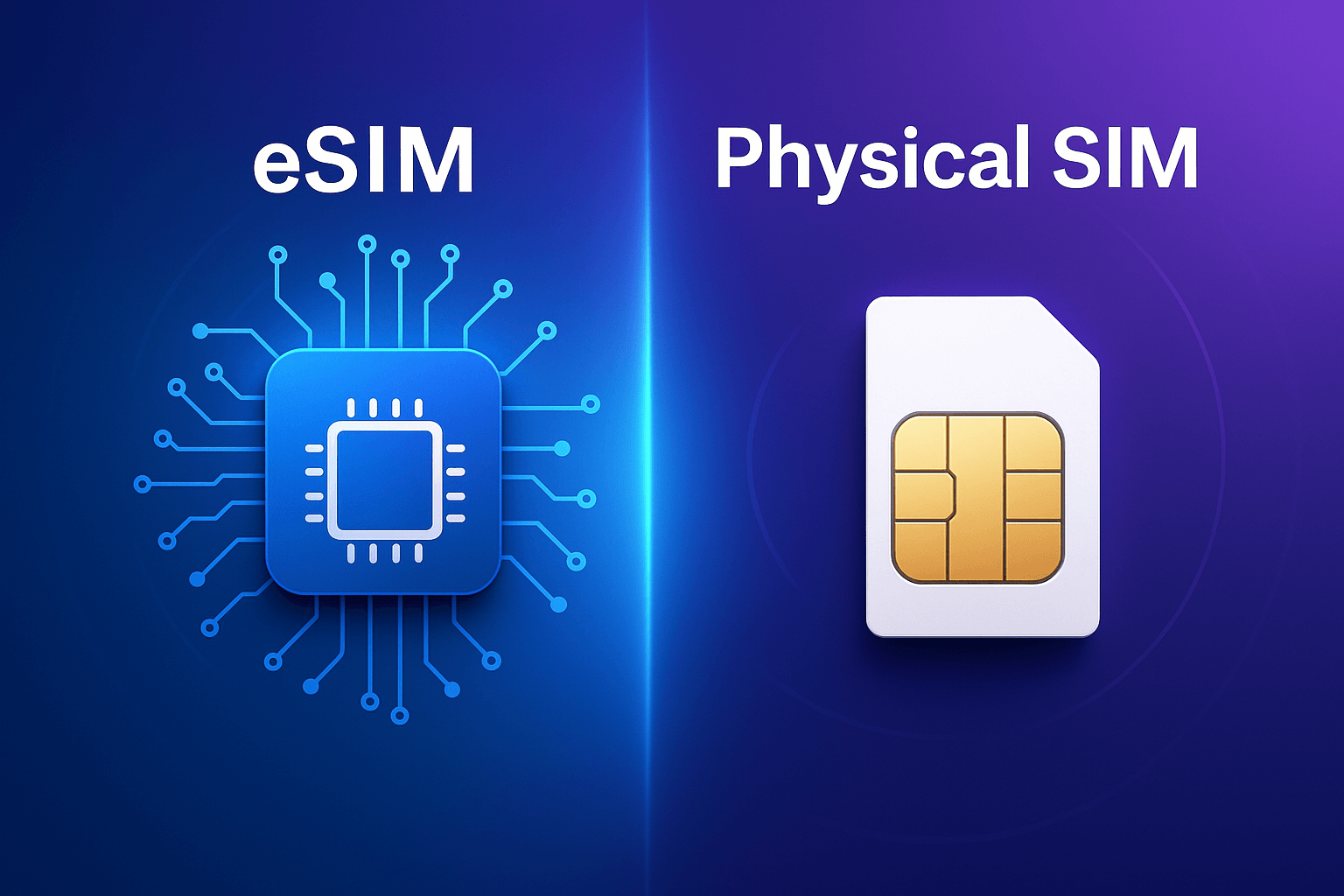
eSIM or Physical SIM: Which One Works Best for You in 2025?
In the ever-changing landscape of technology, three giants stand tall –
Apple, Huawei, and Samsung. Each company possesses a unique story, a
distinctive economic footprint, and a vision that shapes the future of
innovation. This blog post embarks on a comparative journey, exploring the
historical trajectories, economic impacts, and future technologies envisioned
by these tech titans.
Apple - Orchestrating Innovation
1-
A
few historical facts
Apple Inc.'s journey began in 1976 when Steve Jobs, Steve Wozniak, and
Ronald Wayne revolutionized personal computing. The Macintosh in 1984 and the
iPhone in 2007 became iconic milestones, redefining industries and consumer
experiences. Apple's unwavering commitment to innovation cemented its position
as a tech trailblazer.
2-
Economic
Impact: The Apple Ecosystem
Apple's economic influence is profound. With a market capitalization
exceeding $2 trillion and a robust ecosystem including the App Store, Apple drives
global economies. In 2021, its revenue surpassed $365 billion, showcasing its
financial prowess. The App Store alone generated $78 billion in 2021, fostering
a thriving developer community.
3-
Future
Technologies: Augmented
Reality and AI Integration
Apple's future lies in augmented reality (AR) and artificial
intelligence (AI). ARKit, introduced in 2017, laid the groundwork for AR
apps, while AI advancements promise intelligent user experiences. The seamless
integration of AR into iPhones and the potential development of AR glasses hint
at a future where digital and real worlds converge, reshaping how we perceive
reality.
Huawei - Overcoming Adversity, Embracing Diversification
1-
Global
view
Founded in 1987 by Ren Zhengfei, Huawei faced skepticism but emerged as
a global telecommunications leader. Overcoming challenges, the company
diversified into cloud computing, AI, and electric vehicles. Despite US
sanctions, Huawei's strategic moves into chip manufacturing and a patent
cross-licensing deal with Ericsson underscore its resilience.
2-
Economic
Impact: Navigating Storms,
Finding Stability
Huawei's adaptability shines through economic challenges. A 3.1% revenue
growth in 2022, reaching 310.9 billion yuan ($43.1 billion), showcased its financial
resilience. Diversification into AI, cloud computing, and intelligent
automotive solutions bolstered revenues. Huawei's foray into semiconductor
manufacturing signifies its commitment to technological self-reliance.
3-
Future
Technologies: 5G, AI, and
Technological Independence
Huawei's future hinges on 5G networks and AI applications. Progress in
5G technology and investments in industrial AI showcase its technological
ambitions. Huawei's semiconductor ventures aim for self-sufficiency,
emphasizing the company's drive to shape the future of connectivity and
intelligence.
Samsung: Innovating,
Sustaining, and Integrating
1-
Samsung's
Legacy of Innovation
Originating in 1938, Samsung transitioned into electronics in the 1970s,
marking the beginning of an era of innovation. Bendable TVs, smartphones, and
AI-powered appliances defined Samsung's legacy. Its diverse portfolio
solidified its reputation as a leading consumer electronics manufacturer.
2-
Economic
Impact: Sustainability and
Market Influence
Samsung's economic influence spans sustainability and market dominance.
Reductions in carbon emissions and increased usage of recycled materials
underscore its commitment to environmental responsibility. The widespread
adoption of Samsung products, from smartphones to smart home appliances,
showcases its market influence.
3-
Future
Technologies: User-Centric
Design and Environmental Sustainability
Samsung's future focuses on user-centric design and energy efficiency.
Intuitive technology, customizable devices, and energy-efficient initiatives
redefine user experiences. SmartThings Energy and energy-efficient TV remotes
exemplify Samsung's commitment to environmental sustainability, promising a
greener, technologically advanced future.
Conclusion
In the dynamic realm of technology, Apple, Huawei, and Samsung epitomize
resilience, innovation, and adaptability. Each company's journey, economic
impact, and future technologies vividly picture their roles in shaping our
digital future. As these tech titans continue to innovate, the world eagerly
anticipates the transformative technologies and experiences they will usher in,
paving the way for a future where possibilities are limitless, and innovation
knows no bounds